Tell us about the job
Takes about a minute. No obligation.
A contractor called out for water heater trouble in Clinton County will look at the unit itself before anything else. 49 severe weather events were recorded in Clinton County, Illinois between 2015 and 2024. At that rate, severe weather is something the area sees from time to time, not a sustained load that steadily degrades components year after year. Sediment accumulation, a corroding anode rod, or a thermostat that was never quite right from the start are the reasons tanks fail here. A contractor who checks those first is not ignoring the local record; those factors simply carry more weight than weather in a county with a light event history.
A water heater sitting in a house built generations back carries a repair history that tends to show itself only once a contractor opens the unit. Sediment layers at the tank bottom, corroded anode rods, and fittings that have been patched more than once are the common finds, and each one changes what the repair actually requires. Half the homes in Clinton County, Illinois were built in 1977 or earlier (2020-2024 ACS 5-year). That means a contractor working through this county's housing stock regularly encounters water heaters where the visible symptoms point one direction and the interior condition points another. What a homeowner gets quoted after the unit is open is often different from the initial estimate, and for good reason.
The Parts of a Water Heater a Contractor Checks First
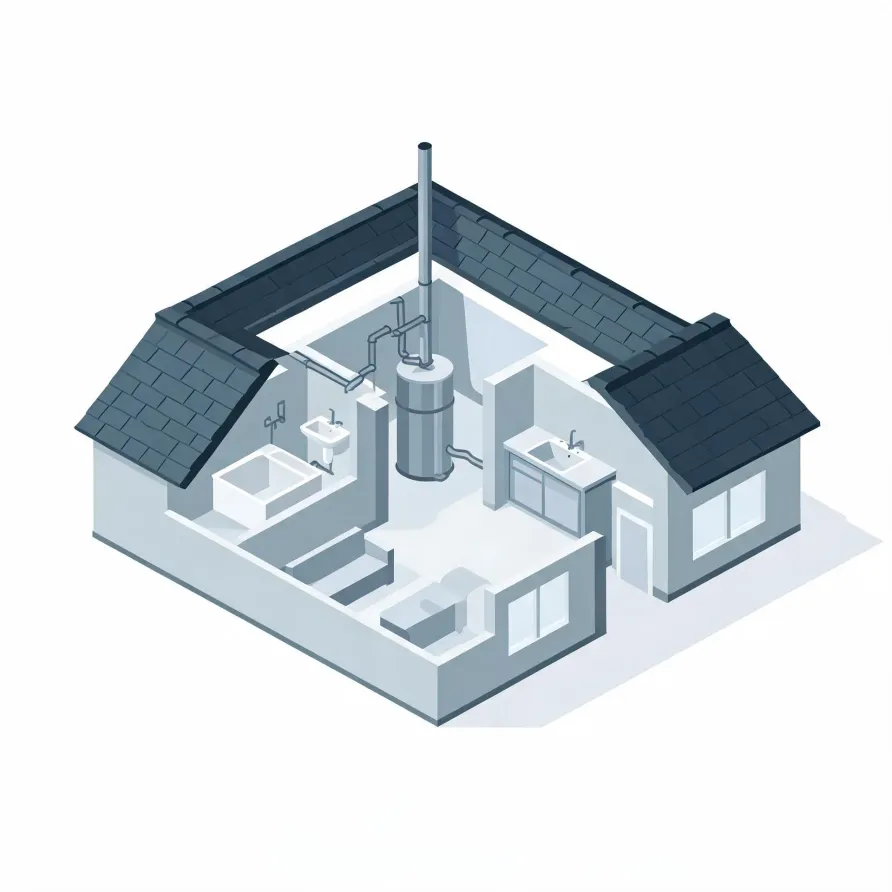
The tank is the piece a homeowner usually notices, sitting in a utility closet, basement, or garage and holding the supply of heated water for the house. The burner assembly or heating element sits at the base or inside the tank and is where a contractor looks first when the water runs cold or never gets hot.
The thermostat controls the target temperature and can cause either scalding water or no hot water at all when it fails. The anode rod runs down through the tank interior and slows corrosion from the inside out; the pressure relief valve mounts to the side of the tank and releases if pressure or temperature climbs past a safe point.
The drawing shows the general layout of a water heater system, and a licensed contractor determines which parts apply and what work is needed in your particular home.
Get matched in Clinton CountyClinton County by the numbers
49 severe weather events were recorded in Clinton County, Illinois between 2015 and 2024.
NOAA National Centers for Environmental Information, Storm Events Database, bulk CSV export, events 2015-01-01 through 2024-12-31.Half the homes in Clinton County, Illinois were built in 1977 or earlier (2020-2024 ACS 5-year).
U.S. Census Bureau, 2020-2024 American Community Survey 5-Year EstimatesClinton County, Illinois holds 15,765 housing units (2020-2024 ACS 5-year).
U.S. Census Bureau, 2020-2024 American Community Survey 5-Year EstimatesOwners occupy 80.3% of the occupied homes in Clinton County, Illinois (2020-2024 ACS 5-year).
U.S. Census Bureau, 2020-2024 American Community Survey 5-Year EstimatesCodes & Standards Covering Water Heater Repair in Clinton County, Illinois1 sourced rules and standards
Licensing and Legal Requirements in Clinton County, Illinois
Illinois leaves HVAC licensing to the municipality: state law lets the corporate authorities of each city or village examine, license and regulate heating, air conditioning and refrigeration contractors, and caps the licence fee they may charge at $50 — so who licenses you depends on the town you work in.
Severe Weather Events in Clinton County
Extreme weather puts real strain on water heaters, forcing them to recover faster and run longer than they would under mild conditions. How hard that pressure lands depends on what the local climate actually does, and Clinton County has its own record.
49 severe weather events, 2015–2024. Source: NOAA National Centers for Environmental Information, Storm Events Database.